
Table of Contents
THEMIS MulTi-Ray spectrograph (MTR2)
MTR2 is the advanced version of the original MulTi-Ray spectrograph of THEMIS. MTR2 enables the production of high-spectral resolution spectrograms simultaneously in different wavelengths. This enables the study of different physical properties of the distinct layers of the solar atmosphere.
MTR2 spectral resolution
MTR2 spectrograph has an effective resolving power, R, in the range of 300 000 to 400 000, making it one of the most spectrally powerful instrument in astrophysics.
MTR2 can be setup either with a tunable slit of with a slitjaw mirrors with an effective slit width of about 0.3“. The actual spectral resolution depends evidently on the wavelength and entrance slit width as well as the specific angle of the MTR2 gratings, hence exact spectral resolution depends on the specific of each-set-up. Overall THEMIS MTR2 spectral resolution is driven by the entrance slit width, which is thus the main limiting factor.
The following table present typical values of the MTR2 spectral resolution, δλ, for different wavelength and F2 entrance slit width.
| Wavelength | ||||||
|---|---|---|---|---|---|---|
| Hβ | Fe I doublet | He I D3 | Fe I doublet | Hα | ||
| 4861.3 Å | 5250.0 Å | 5875.7 Å | 6302.0 Å | 6562.8 Å | ||
| MTR2 | 0.5” | 19 mÅ | 23 mÅ | 28 mÅ | 26 mÅ | 31 mÅ |
| entrance | 0.3“ | 12 mÅ | 14 mÅ | 17 mÅ | 17 mÅ | 20 mÅ |
| slit width | 0.1” | 6 mÅ | 7 mÅ | 9 mÅ | 9 mÅ | 10 mÅ |
More complete details on the formulas can be obtained in the MTR2 technical document THEMIS spectrograph (author: Claude Le Mein).
Schematics of MTR2
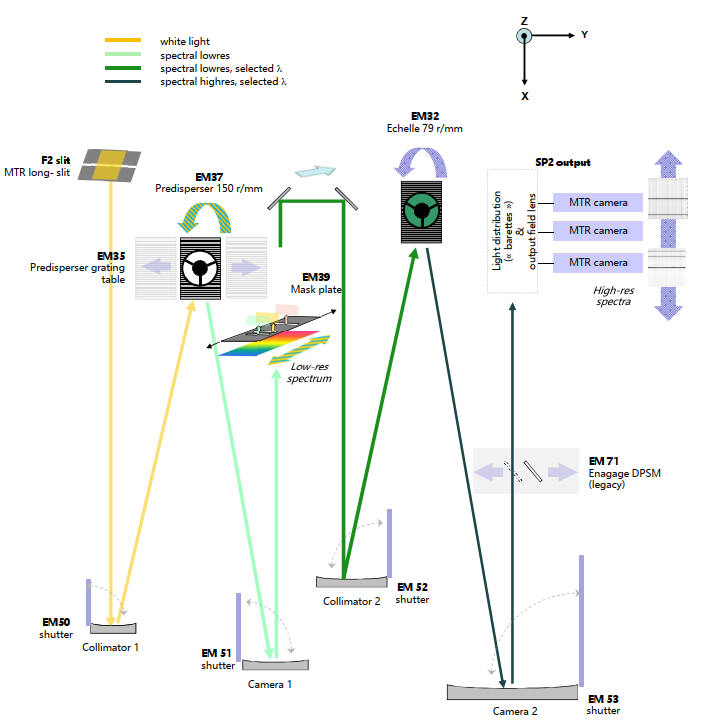
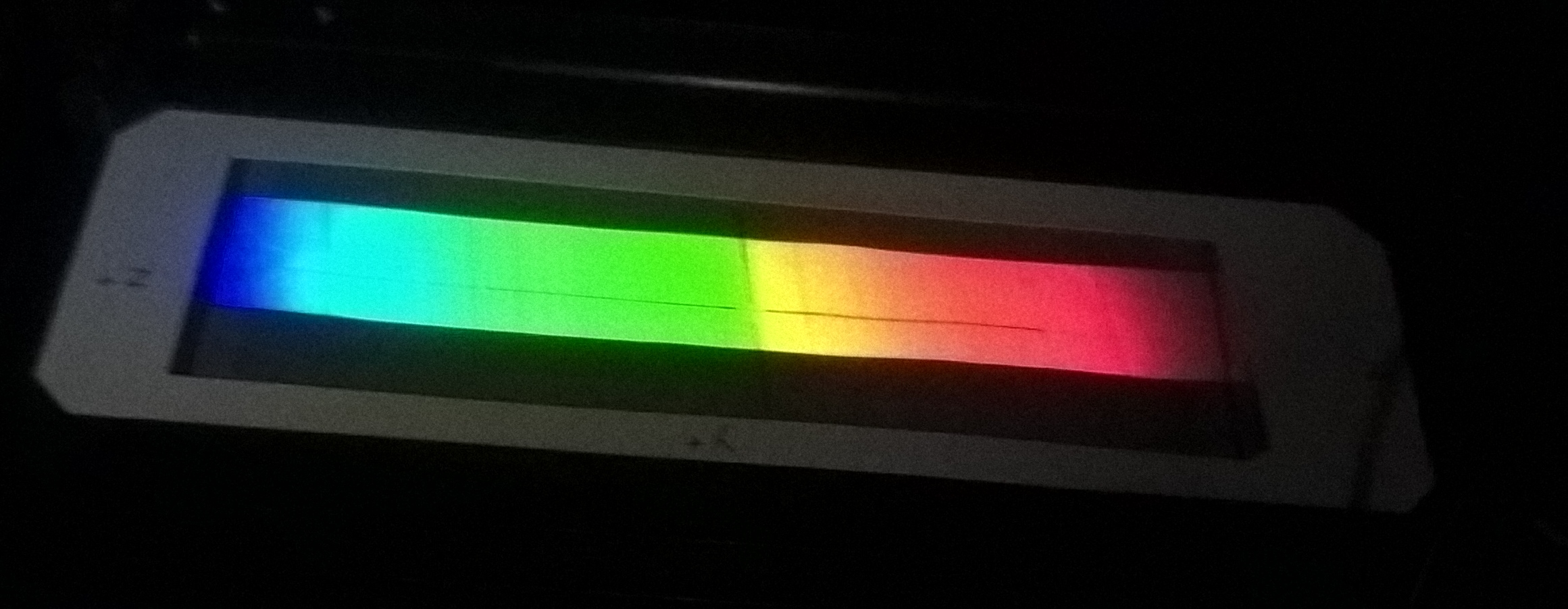
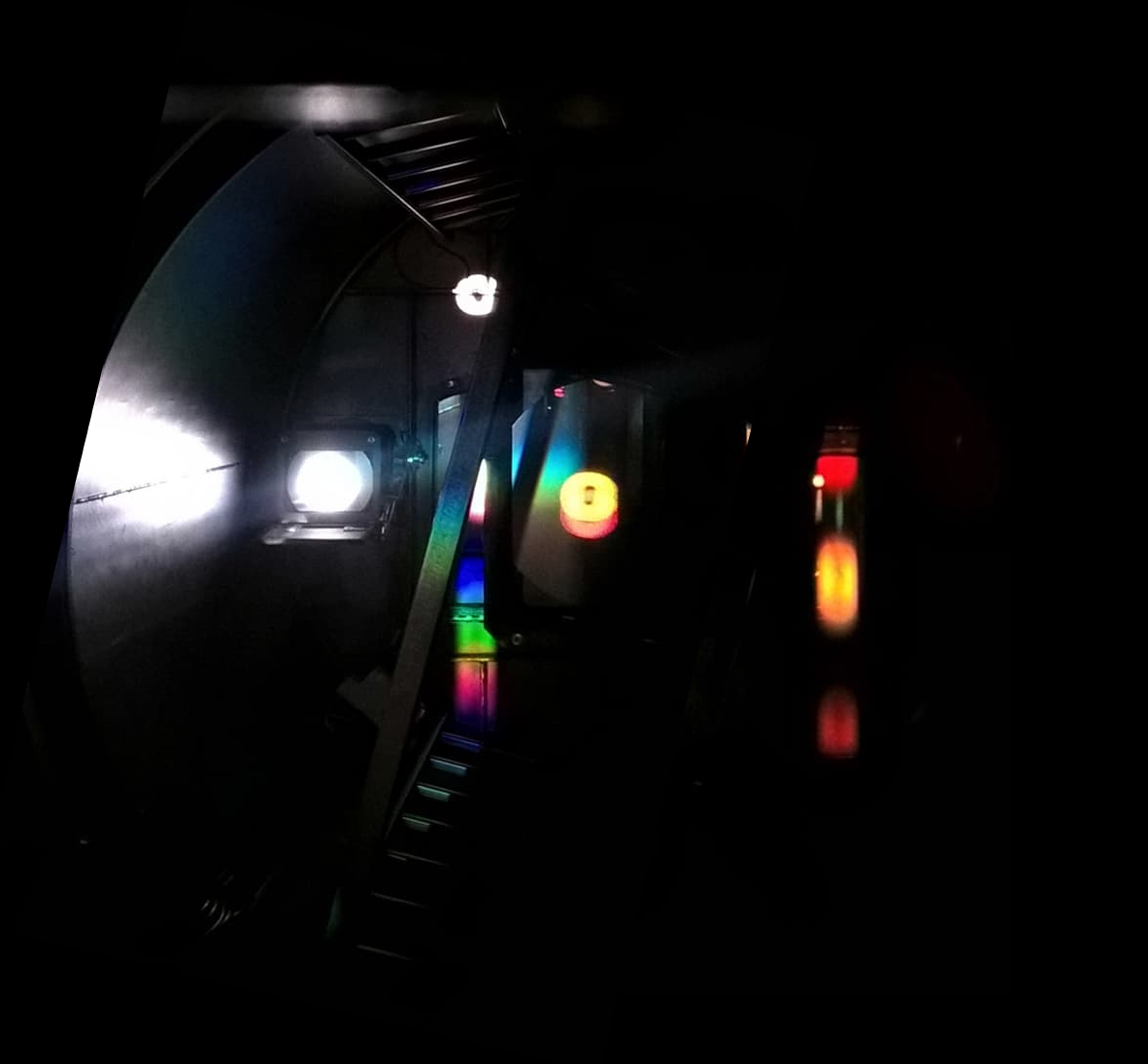
MTR2 is made of a predispersor (“SP1” first one on the left part), forming a low resolution spectrum on the wavelength selector (so called the “mask plate”). From there, only the selected bandwiths travel to the high-resolution echelle spectrograph (right part), ending over the MTR cameras at the SP2 output (one bandwith per camera). The optical layout along Y is fixed (no changes, never). The ruling of the gratings are along Y only and the dispersion of both spectra is along Z only. The entrance slit is fixed (but for its width), and such are the collimators and camera mirrors. The moving parts are:
In short:
Data and formulae for the MTR2 can be found in the following document: Spectrograph simulation toolsThese tools allow the observer to quick check the feasibility of a setup
Observers can also check the list of existing available mask plates to have an idea of readily available combination. Solar spectra resources
|
|
© 2026 CNRS-THEMIS
Terms of use: unless otherwise specified, all graphical (webcam records, movies, pictures) or non-graphical material (text) from this site is property of CNRS-THEMIS under a Creative Commons CC-BY 4.0 license.


